Home › Asphalt Pathways, Sidewalks, and Trails
We install asphalt pathways and trails in Richmond, VA for parks, schools, and commercial campuses. Our smooth, accessible paths are ideal for walking, jogging, and biking, and can follow winding routes through your property. Request a pathway or trail paving quote today.
Precision Asphalt Richmond provides professional asphalt pathway paving throughout Richmond, VA, Virginia and the surrounding area. Our licensed, insured crew delivers safe, clean, on-time work with a free estimate before anything begins. Call (804) 409-4124 or request your free quote.
Durable Asphalt Pathways, Sidewalks, and Trails in Richmond, VA
If you walk it, bike it, or push a stroller on it, it needs to be safe and smooth. Precision Asphalt Richmond builds and repairs asphalt pathways, sidewalks, and multi‑use trails for properties across the Richmond area, including Henrico, Chesterfield, and the surrounding counties. We focus on the details that matter here locally, like tree roots, heavy summer rain, and freeze‑thaw cycles that can break apart poorly installed surfaces.
Our asphalt pathway paving work covers HOA walking loops, apartment community sidewalks, school and church walkways, greenway and park trails, and private paths on large residential lots. We help property managers, boards, and owners decide where paths should run, how wide they need to be, and what thickness will hold up to the mix of walkers, joggers, wheelchairs, and golf carts or light maintenance vehicles.
Because we live and work in Richmond, we understand the clay soils, drainage patterns, and shade from mature trees in older neighborhoods like The Fan, Westover Hills, Lakeside, and Bon Air. These factors all affect how your path should be designed and built. We walk the site with you, talk through how people actually use the space, and then design an asphalt solution that will age well instead of crumbling in a few seasons.
How Asphalt Pathway Paving Actually Works
A good pathway or sidewalk is mostly about what you cannot see. Here is how Precision Asphalt Richmond typically handles a new asphalt pathway or trail project.
1. Site walk and layout: We start by walking the planned route with you and marking the alignment with paint and flags. We check for low spots that might collect water, tree roots that could cause future heaving, and existing utilities that might limit depth. For HOA or commercial sites we can provide a sketch layout for board approval.
2. Excavation and base prep: We remove grass, organic material, and soft soil to reach a firm subgrade. In the Richmond area, clay can hold water, so we often over‑excavate in wet spots and replace that material with compacted crushed stone. The thickness of this base layer usually ranges from 4 to 8 inches depending on expected traffic.
3. Grading and drainage: Using small graders and hand tools for tighter areas, we shape the path so water sheds off the surface. For pathways near buildings or in low‑lying Chesterfield and Eastern Henrico sites, we may add shallow swales or under‑drains so water moves away instead of ponding on the pavement.
4. Stone base compaction: The stone base is compacted in lifts using a plate compactor or roller until it is firm and stable. If the base moves underfoot or shows rutting under the roller, we correct that before any asphalt goes down. Skipping this step is what leads to wavy, cracked walkways a year or two later.
5. Asphalt placement: For most pathways and sidewalks we install a 2 to 3 inch thick asphalt surface course. On heavier duty trails that may see maintenance trucks, golf carts, or service vehicles, we may recommend a binder course below the surface course for added strength.
6. Compaction and edges: As soon as the asphalt is laid, we compact it with an appropriate roller. Edges are hand‑finished to avoid crumbling and to create a clean line against grass, mulch beds, or curbing.
7. Final cleanup and walk‑through: We sweep the area, remove loose stone and debris, and walk the project with you so you know curing times, how soon to allow foot traffic, and what to watch for during the first few weeks.
Pathway Design Options and Accessibility Considerations
No two properties in Richmond are alike, which is why we treat pathway and sidewalk design as a custom process. Precision Asphalt Richmond can match existing paths or help you upgrade from broken concrete or gravel to a smoother, more uniform asphalt surface.
Width and layout: For neighborhood walking paths and residential sidewalks, 4 feet is usually the minimum. For multi‑use trails where bikes, strollers, and joggers will mix, 6 to 10 feet is more realistic. Curves, intersections with driveways, and transitions to parking lots are all adjusted so movement feels natural and safe.
Surface texture: Asphalt pathways can be rolled to a very smooth finish, good for wheelchairs and walkers, or left with a slightly more textured surface for traction on steeper grades. We calibrate this based on your property and how the space is used.
ADA and accessibility: If you are working on a commercial, school, church, or multifamily site in Richmond, pathways and sidewalks often need to meet ADA standards. That typically means:
• Slope not exceeding 5 percent for walks, or treated as ramps with landings and handrails if steeper.
• Cross‑slope (side‑to‑side slope) limited to about 2 percent so wheelchairs do not drift.
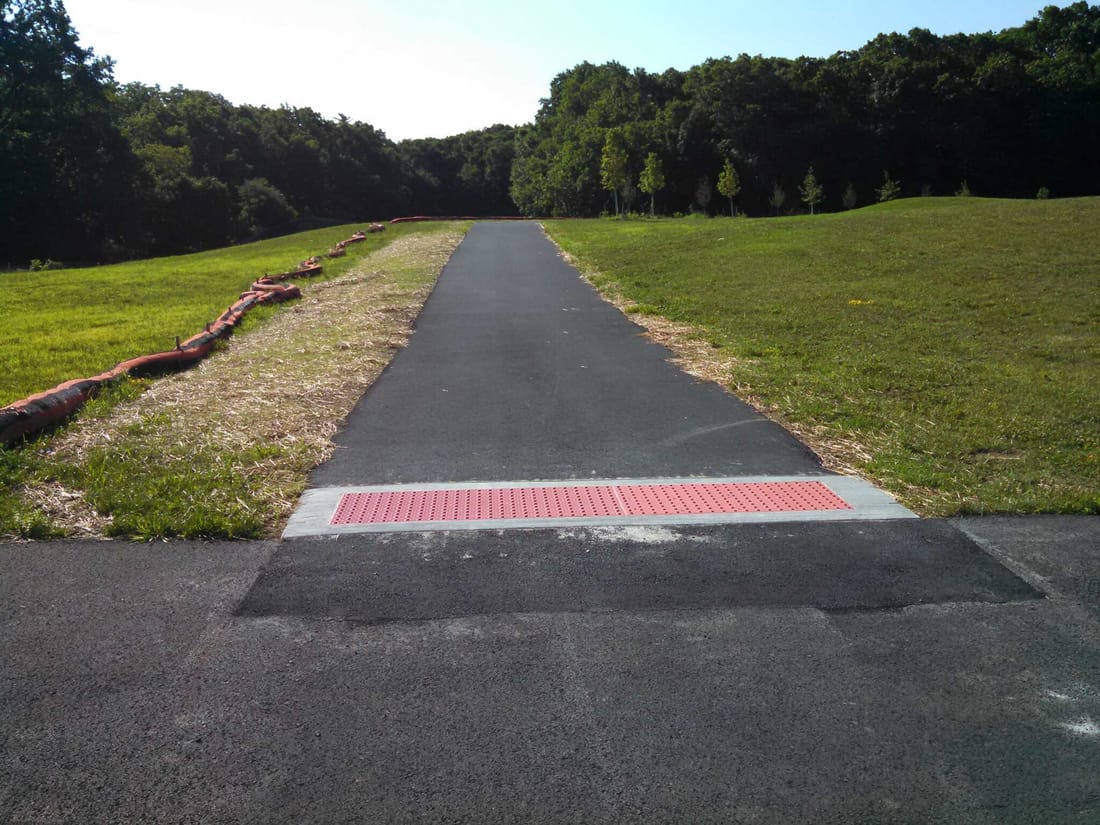
• Stable transitions where paths meet parking lots, crosswalks, or building entrances so there is no lip that can catch a caster.
We can coordinate with your architect or civil engineer, or simply work from the city‑approved site plan, to ensure your asphalt pathway paving meets current accessibility expectations.
Color and edging: Standard asphalt is black, which provides a nice contrast with lawn and landscaping. In park or campus settings, some clients choose light striping or painted centerlines on wider trails to separate traffic or mark mileage. Concrete mow strips, timber headers, or steel edging can be added along the sides where you want a more formal look or tighter control of mulch and turf.
Costs, Permits, and Local Factors That Affect Your Project
Richmond property owners often want to know why two pathway quotes can look so different. The cost of asphalt pathway paving is driven by a few key factors that we explain clearly in our proposals.
Length and width: Since asphalt and stone are bid by the ton, more square footage means more material. A narrow 3 to 4 foot garden path costs less per linear foot than a 10 foot wide multi‑use trail, even if they run the same distance.
Base conditions: If the existing soil is firm and drains well, we can work with a standard stone base. In low areas near creeks, on poorly draining clay, or where heavy roots are present, we may need additional excavation and thicker stone to prevent future settlement and cracking.
Access and equipment: Tight backyards in older Richmond neighborhoods or pathways that run behind buildings may require smaller equipment and more hand work. That can add labor time even for shorter projects.
Permitting: For most private sidewalks or short pathways inside your property, the City of Richmond or the counties typically do not require a permit as long as you are not working in the public right‑of‑way. As soon as a path connects to a public sidewalk, crosses a drainage easement, or impacts a city tree, local review may be required. For HOAs and commercial properties, plan approval may already be part of your overall site plan. We help you understand when you should check with the city, county, or HOA architectural committee.
Timing and weather: Asphalt is sensitive to temperature and moisture. We schedule most pathway work from early spring through late fall. Light rain can sometimes be managed, but for best results we avoid paving over saturated bases or during extreme cold. If your project is time‑sensitive, we will explain how season and weather may affect scheduling and cure time.
Repairs, Maintenance, and When to Replace Your Asphalt Path
If you already have asphalt pathways or sidewalks on your Richmond property, Precision Asphalt Richmond can help you decide whether to repair, resurface, or replace them.
Crack filling and patching: Hairline and small cracks are normal as asphalt ages. Sealing them keeps water out of the base and slows further damage. We rout and fill larger cracks with hot crack sealer and cut out and patch areas where tree roots or failed base have caused sinking or heaving.
Resurfacing (overlay): If the base is still solid but the surface is rough, oxidized, or lightly alligatored, an asphalt overlay can give you a fresh surface without a full rebuild. We mill or level high spots, clean thoroughly, apply a tack coat, then install a new surface layer. This is common on older HOA walking loops and apartment complex sidewalks where budgets are tight.
Full replacement: When you see widespread deep cracks, standing water after every storm, or large areas that move underfoot, it usually means the base has failed. In those cases, we recommend removing the old pavement, rebuilding the base correctly, and then installing new asphalt. This costs more upfront but usually saves money over repeated patches that do not hold.
Routine care: Keeping edges trimmed, clearing leaves and debris, and avoiding heavy vehicle traffic on light‑duty paths will increase the life of your asphalt. If your site uses de‑icing products on walkways, we can suggest options that are less aggressive on asphalt.
If you are in Richmond, Henrico, Chesterfield, or the surrounding communities and need new asphalt pathways, sidewalks, or trail work, we are happy to walk the property with you, discuss options, and provide a clear, line‑item estimate so you know exactly what you are paying for and how long it should last.