Home › Road, Street, and Municipal Paving
Our road paving services in Richmond, VA support municipalities, HOAs, and private communities with smooth, long lasting streets. We handle milling, paving, and traffic control to minimize disruption while improving ride quality. Request a quote for your road paving project today.
Precision Asphalt Richmond provides professional road paving throughout Richmond, VA, Virginia and the surrounding area. Our licensed, insured crew delivers safe, clean, on-time work with a free estimate before anything begins. Call (804) 409-4124 or request your free quote.
Road, Street, and Municipal Paving in Richmond, VA
Municipal and public roadway work in Richmond is not just about putting down blacktop. It is about building safe, durable travel surfaces that can handle summer heat, winter freeze-thaw cycles, and heavy local traffic. Precision Asphalt Richmond focuses specifically on road, street, and municipal paving, so our process is built around the needs of city engineers, HOAs, facility managers, and public works departments.
When you contact Precision Asphalt Richmond about road paving, we start with a site walk and a review of your plans or current pavement issues. For existing roads, we document cracking patterns, standing water, utility locations, and traffic loading. For new streets, we confirm alignment, grades, and subgrade conditions. We then match these field findings to realistic pavement designs that balance performance, budget, and maintenance expectations.
Because Richmond’s clay soils can soften in wet seasons, we pay close attention to base and subgrade support. In many cases, improving drainage and base structure extends pavement life more than simply adding asphalt thickness. Our goal is to help you avoid recurring patches and emergency work by investing in the parts of the pavement structure that actually control long-term performance.
How the Road Paving Process Works Step by Step
For public roads, neighborhood streets, and access drives, we follow a clear sequence so you know exactly what to expect.
1. Investigation and planning: We evaluate traffic types (passenger vehicles, buses, delivery trucks, garbage trucks), look at turning and braking areas, and identify weak subgrade zones. For municipal projects, we coordinate with your engineer or use VDOT and City of Richmond guidelines for pavement sections and mix types.
2. Milling or excavation: For rehabilitation projects, we typically remove failed asphalt with a milling machine. We choose depth based on existing thickness and structural condition. In some cases, we will full-depth reclaim or undercut soft spots instead of simply overlaying them. For new streets, we excavate to plan grade and prepare the subgrade according to design.
3. Subgrade preparation and stabilization: Richmond soils often include plastic clays that hold water. We proof-roll the subgrade with a loaded truck to identify pumping or deflection. Soft areas may be undercut and replaced with crushed stone, or treated with stabilization methods if required by the design. We fine grade and compact to specified density so the base and asphalt are supported evenly.
4. Aggregate base installation: We install a stone base layer (often VDOT 21B or similar) in one or more lifts, compacting each to specification. Proper base thickness and compaction are critical for streets that will see garbage trucks, school buses, and delivery traffic.
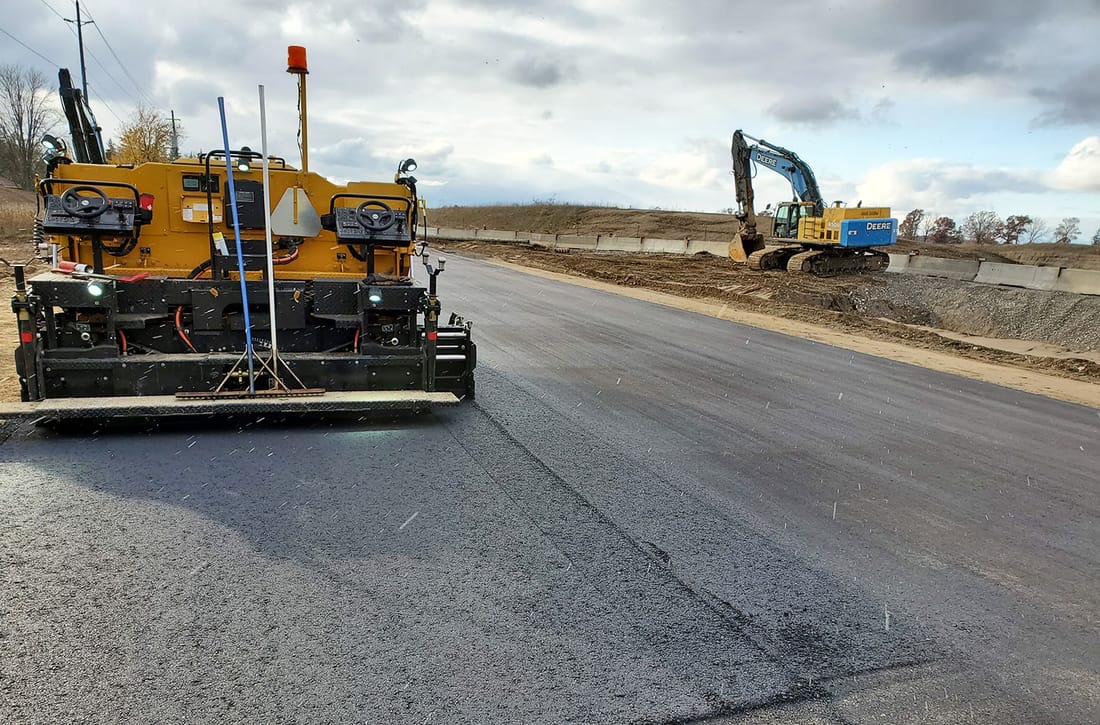
5. Asphalt placement: We typically place a binder course first, using a paving machine and vibratory rollers to achieve uniform density. A surface course is then installed to the specified thickness and mix design. For municipal roads we follow mix design requirements and compaction standards that meet or exceed local requirements.
6. Joint finishing and compaction: Longitudinal and transverse joints are treated with extra care because they are common failure points. We stagger joint locations between lifts when possible, apply tack coat, and compact while mixes are still in the proper temperature range.
7. Final cleanup and punch list: After paving, we address transitions at driveways, adjust manholes and valve boxes as needed, and complete a final walk-through with you before striping and signage are scheduled.
Asphalt Mixes, Structural Design, and Options for Richmond Roads
Not all asphalt is the same, and the right mix for a residential cul-de-sac is different from a bus route or industrial access road. Precision Asphalt Richmond works with approved plants around the Richmond area to select mixes that handle local conditions and traffic.
For road paving, a typical section might include a base or binder mix with larger aggregate to carry heavy loads, topped with a finer surface mix that provides a smoother ride and better skid resistance. On routes with slow, heavy vehicles or tight turning movements, we may specify thicker binder courses or different aggregate gradations to resist rutting in summer heat.
In areas that see frequent utility cuts or where future work is likely, we may recommend a slightly thicker asphalt structure or a design that accommodates easier patching without compromising the entire roadway. For streets near hospitals, schools, and residential neighborhoods, we can also discuss noise considerations related to surface texture.
Local weather is a key factor. Richmond sees freeze-thaw cycles that can cause moisture in the base and subgrade to expand and contract. To limit cracking and potholes, we use appropriate air void targets and compaction practices to reduce permeability in the finished mat. We also pay attention to the timing of paving work, choosing seasons and times of day when surface and air temperatures support proper compaction and bonding.
If you are not working with a design engineer, we can provide practical recommendations on pavement thicknesses for local streets, cul-de-sacs, alleys, and access roads based on actual loading, not just rules of thumb. This helps avoid both over-building and under-building your pavement.
Cost Drivers and Project Planning for Streets and Municipal Work
Understanding what drives the cost of road paving helps you plan and budget more accurately. The visible asphalt is only part of the equation. The condition of the base and subgrade, traffic control needs, and project phasing often affect cost as much as the paving itself.
Major cost factors include:
• Existing pavement condition: If the current road has deep structural failures, extensive alligator cracking, or widespread base pumping, we may need milling, undercutting, or stabilization rather than a simple overlay.
• Access and traffic control: Municipal and neighborhood streets must often remain partially open. Planning lane shifts, temporary closures, flaggers, and detours can affect both labor and schedule. We coordinate with you to minimize disruption to residents, schools, and businesses.
• Thickness and structure: Heavier traffic routes require thicker pavement sections and possibly improved bases. We help you match pavement design to actual traffic so you are not paying for more structure than you need, or cutting corners that will lead to early failure.
• Utility conflicts: Manholes, inlets, and water or gas valves must be located, protected, and adjusted. Roads with frequent utility features take more time and care to pave correctly and preserve proper drainage.
• Scheduling and phasing: Working nights or weekends, or splitting a project into many small segments to keep access open, can increase mobilizations and supervision needs. We will walk through options with you so you understand how schedule choices affect pricing.
Precision Asphalt Richmond prepares clear, itemized proposals that separate milling, base repair, asphalt placement, patching allowances, and striping where applicable. That way you can see what each part of the work costs and can make informed decisions if scope changes are needed.
Common Road Problems in Richmond and How We Address Them
Roads and streets around Richmond face a mix of stresses, from delivery trucks and school buses to periodic flooding and utility work. Recognizing early warning signs helps you plan repairs before conditions deteriorate into safety hazards or major reconstruction.
Frequent issues we see include:
• Alligator cracking and base failure: This usually signals structural issues in the base or subgrade, not just an aging surface. Our approach is to remove and replace failed areas full depth, improve base support, then tie new pavement into the existing mat with proper joints.
• Rutting in wheel paths: In bus routes or truck routes, rutting may result from heavy loads combined with insufficient thickness or poor compaction. Corrective work may involve milling and replacing with a stronger mix or thicker section. We also review drainage and subgrade support to keep the problem from returning.
• Potholes and patchwork surfaces: Constant patching often indicates underlying moisture or drainage issues. Instead of chasing individual holes, we evaluate why the pavement is breaking apart, then design repairs that restore a continuous, well-supported surface.
• Edge breakdown on narrow streets: On local and subdivision roads without curb or adequate shoulder support, edges can crumble under vehicle loads. We can widen the structural section, improve shoulder support, and adjust drainage to protect the new edge.
Before recommending any major work, Precision Asphalt Richmond documents existing defects, explains what is causing them in plain language, and outlines repair options that fit your budget and long-term plans. For HOAs and facility managers, we can also help prioritize phases so the highest risk areas are addressed first.
When to Schedule Road Paving and How to Get Started
In the Richmond area, the best time for road and street paving is usually from late spring through early fall when both day and night temperatures are more favorable. Warm weather helps asphalt stay workable long enough to achieve proper compaction, which is critical for long-term durability. Early spring and late fall can still be workable for certain projects if daytime temperatures and forecasts cooperate, but we plan carefully to avoid cold-weather compaction problems.
For municipal and HOA projects, planning often starts months in advance. Budget cycles, permitting, and coordination with other work such as utility upgrades or sidewalk improvements all affect timing. If you are considering a project for next paving season, it is wise to involve a contractor like Precision Asphalt Richmond early so the pavement scope aligns with your overall capital plan.
To get started, gather any available information such as existing plans, traffic counts, utility maps, or past repair records. During our initial visit we will walk the site with you, discuss current issues and expectations, and outline practical options, whether that is a mill and overlay, full-depth reconstruction, or phased repairs.
Precision Asphalt Richmond understands that road paving projects affect residents, businesses, and public safety. We work with you to develop clear communication plans, realistic schedules, and traffic control strategies so that the project is completed efficiently and with as little disruption as reasonably possible.