Home › Commercial Asphalt Resurfacing & Overlays
We provide commercial asphalt resurfacing in Richmond, VA to extend the life of aging parking lots and drives. Our team mills high spots, repairs bad areas, and installs a fresh asphalt overlay for a like new surface. Request a mill and overlay assessment for your property.
Precision Asphalt Richmond provides professional commercial asphalt resurfacing throughout Richmond, VA, Virginia and the surrounding area. Our licensed, insured crew delivers safe, clean, on-time work with a free estimate before anything begins. Call (804) 409-4124 or request your free quote.
Commercial Asphalt Resurfacing in Richmond, VA: When It Makes Sense
If you manage a parking lot or driveway in the Richmond area, at some point you will have to decide whether to resurface or fully replace your asphalt. Commercial asphalt resurfacing, sometimes called an overlay, means installing a new layer of asphalt over your existing pavement instead of tearing everything out. At Precision Asphalt Richmond, we usually recommend resurfacing when the asphalt base is still structurally sound but the surface is worn, cracked, or rough.
In central Virginia, the freeze and thaw cycles, summer heat, and heavy storm runoff are hard on pavement. You will see oxidation, raveling, and alligator cracks show up first at the surface. If those issues are caught before the base is badly damaged, a resurfacing project can restore a smooth, black finish and extend the life of your lot by 8 to 15 years at a lower cost than full reconstruction.
We will not suggest a resurfacing overlay just because it is easier. Before we quote this work, we look for signs that the base is failing, such as large areas of sinking, wide structural cracks that move, or standing water that does not go away. If more than about a third of the lot has deep structural problems, complete removal and replacement may be more cost effective for you over the long term. Our goal is to match the solution to your property, traffic patterns, and budget, not to force one option on every customer.
How Commercial Asphalt Resurfacing & Overlays Are Actually Done
A proper overlay is more than just putting a fresh coat of asphalt on top of an old lot. Precision Asphalt Richmond follows a specific process so your new surface bonds correctly and drains the way it should.
Step 1: Site inspection and planning. We walk your lot on foot, not just by truck. We mark every structural crack, pothole, drainage problem, and oil spot. We also note heavy traffic paths at entrances, loading zones, dumpster pads, and drive lanes. This tells us where we may need thicker asphalt, a stronger mix, or extra base repairs before we overlay.
Step 2: Isolated base repairs. Before the overlay, we cut out and remove failed sections down to a solid base. In Richmond clay soils, it is common for certain areas to hold water, so we often undercut soft spots, replace them with compacted stone, and in some cases add a stabilizing fabric. We then install and compact new asphalt in these patches so the lot is level and tight before we resurface.
Step 3: Crack filling and surface prep. We clean and route larger cracks, then fill them with hot rubberized crack sealant so they do not reflect through the new overlay too quickly. Oil-saturated spots are either milled off or treated with a primer so the new asphalt can bond. The entire surface is cleaned with blowers and mechanical brooms to remove dust and debris.
Step 4: Milling transitions and adjusting structures. To keep doors, curbs, and drains at the proper height, we machine mill around concrete aprons, ADA ramps, and storm drains so that the overlay ties in flush instead of creating a trip hazard. In older Richmond lots, the existing asphalt can already be high at entrances, so this milling is critical to avoid raising finished grades above thresholds.
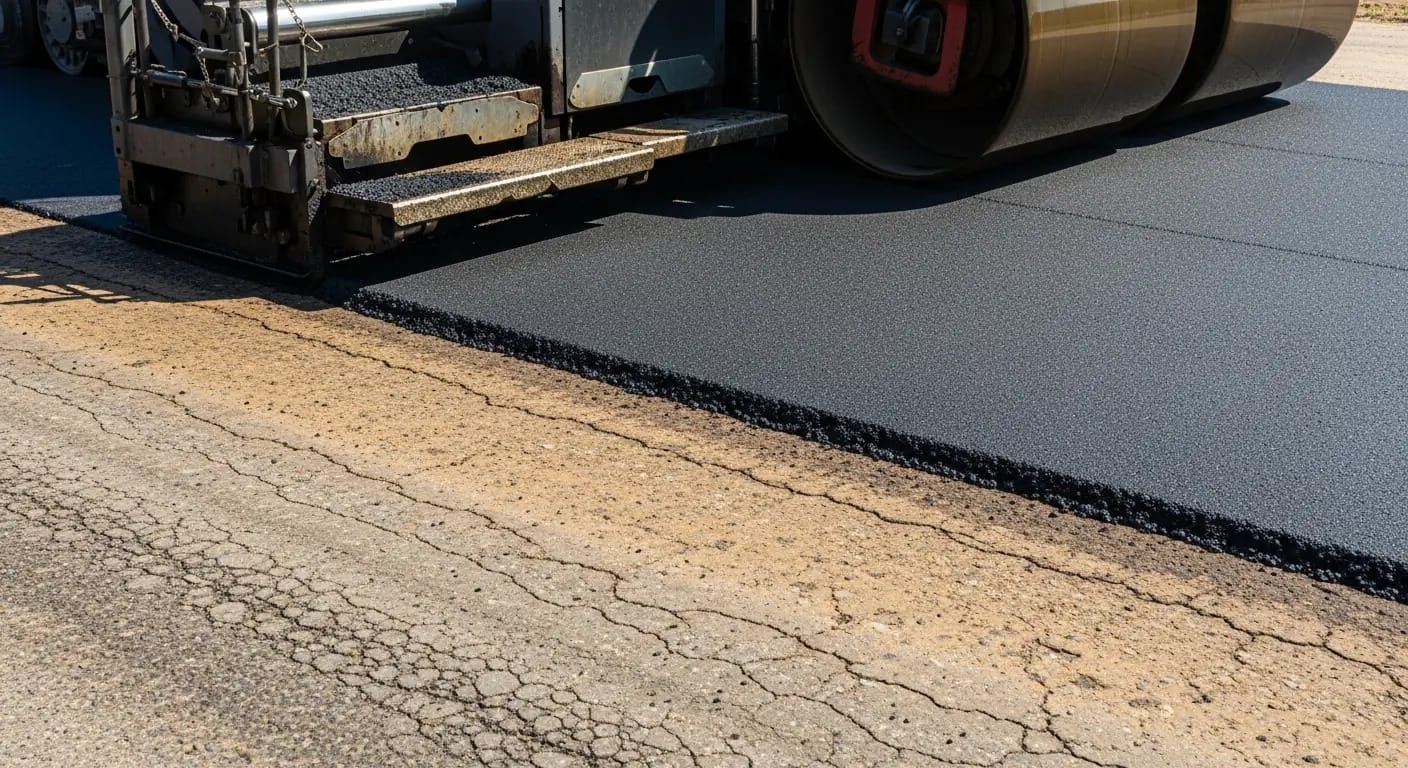
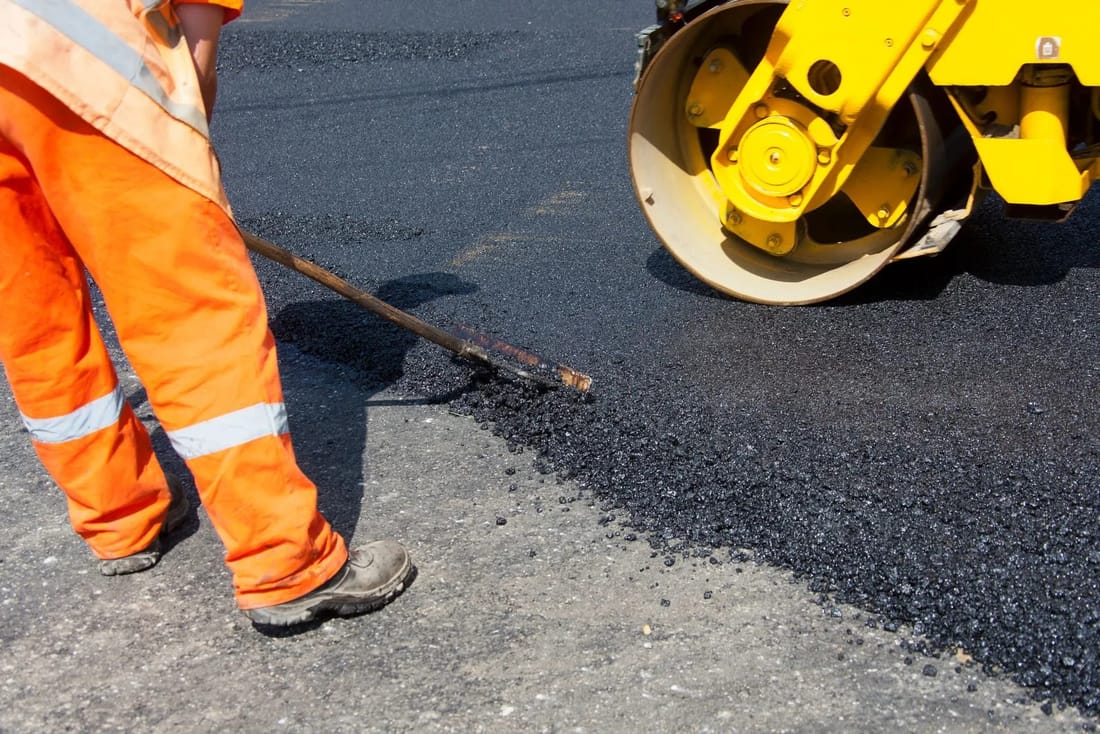
Step 5: Tack coat and overlay paving. We apply a liquid bonding agent (tack coat) to the old asphalt so the new layer fuses to it. Then our crew installs a new asphalt layer, usually 1.5 to 2 inches on parking lots and up to 3 inches in heavy truck lanes, using a commercial paver. The mat is compacted with steel drum and pneumatic rollers to reach the right density and a smooth finish.
Step 6: Striping and final details. After the asphalt cools, we re-stripe parking stalls, ADA spaces, fire lanes, and directional arrows to match your layout or a revised plan. If you need wheel stops, bollards, or signage updated at the same time, we coordinate that so your lot is ready for use with minimal downtime.
Material Options and Design Choices for Overlays
Not every commercial asphalt resurfacing job in Richmond needs the same material. Precision Asphalt Richmond selects the mix based on how your property is actually used.
For most shopping centers, churches, and office lots, we use a dense graded asphalt mix with 9.5 millimeter or 12.5 millimeter aggregate. These mixes give a good balance of smoothness and durability for passenger vehicles. In loading areas, bus lanes, and around dumpsters where trucks turn sharply, we often specify a mix with a higher polymer content or a slightly coarser stone blend to resist rutting and shoving in summer heat.
Overlay thickness also matters. A thin overlay, around 1 to 1.25 inches, can refresh appearance but will not hide deeper imperfections or bridge many existing joints. For long term performance, especially on older Richmond lots that have been patched several times, we recommend 1.5 to 2 inches as a starting point, and thicker where trucks travel. We discuss these options with you so you understand what you are paying for and how it affects expected life.
Design adjustments are an opportunity many owners overlook. When we resurface, we can subtly change slopes within the overlay to move water away from entrances and toward existing drains, as long as there is enough thickness to work with. This matters in our area because intense summer storms can produce heavy runoff in a short time. Small adjustments to slope can prevent ponding that leads to ice in winter and accelerated surface damage.
If you need to add or relocate ADA parking during the project, we can build those slope and layout changes into the overlay plan. That might include creating a flatter path from accessible spaces to the main entrance, adjusting cross slopes, or adding new pavement markings and signage to stay compliant with current standards.
What Drives the Cost of Commercial Asphalt Resurfacing in Richmond
Many property managers ask why prices for commercial asphalt resurfacing can vary from one estimate to another. The overlay thickness is only one factor. Precision Asphalt Richmond breaks down our pricing so you can see where your money is going and compare bids on equal terms.
Key cost drivers include:
1. Surface preparation and base repairs. A lot that only needs minor crack filling before resurfacing will cost less than one that needs multiple full depth patches and milling. In parts of Richmond where the subgrade holds water, such as lower lying areas near streams, we often have to stabilize soft spots, which adds material and labor but helps avoid early failures.
2. Access and phasing. Working around a 24 hour operation, like a medical facility or logistics center, usually means night work or multiple phases so customers and deliveries can still get in and out. That scheduling complexity affects cost compared to a site that can be fully closed for a day or two.
3. Mix type and tonnage. Heavier duty mixes and thicker overlays use more asphalt and cost more upfront, but sometimes save money in the long run if you have frequent truck traffic. We calculate tonnage based on your actual square footage and agreed thickness, not a rough guess, and we share those numbers with you.
4. Drainage and structure adjustments. Milling around existing drains, raising manhole lids, and fine grading to improve drainage all add to the project scope. These items are worth calling out clearly in the proposal so you know whether they are included when you compare our quote with another contractor.
We encourage Richmond property owners to look carefully at what is and is not included in each resurfacing estimate. A low number that skips base repairs, tack coat, or milling at key transitions can cost you more in callbacks, puddles, and premature cracking within a few seasons.
Timing, Maintenance, and What to Ask Before You Hire
Richmond weather has a direct impact on when commercial asphalt resurfacing should be scheduled. Precision Asphalt Richmond typically plans overlays from late March through early November, adjusting for actual temperatures. Asphalt needs proper heat to compact and bond, so nights that drop too low or cold rain in the forecast can hurt quality. For large commercial projects, we usually schedule in late spring or early fall to avoid the extremes of summer heat and winter chill.
After the overlay, we recommend keeping heavy traffic off the new surface for 24 hours when possible, or at least overnight. In hotter months, it can take a bit longer for the asphalt to fully harden, so tight turning truck traffic should be limited for a few days to avoid scuffing. Routine sweeping, keeping drains clear, and sealing cracks as they appear will help you get the maximum life from your resurfaced lot.
Before you hire any contractor for commercial asphalt resurfacing in Richmond, there are a few specific questions worth asking. Ask how they will handle drainage and transitions at your site, not just how thick the overlay will be. Ask whether their price includes milling around concrete gutters and adjusting manholes. Ask what mix design they plan to use for your traffic type and whether they follow Virginia Department of Transportation standards or local equivalents for compaction.
You should also find out how they plan to phase the work. A good plan will keep clear, safe access for your customers and employees while still allowing the crew enough room to work efficiently. At Precision Asphalt Richmond, we walk that plan with you in advance, so store managers or tenants know which entrances will be open on which days. That preparation on the front end helps avoid confusion, complaints, and last minute changes while the paving is underway.